Source Low Voltage XLPE Power Cable for Power Stations, Underground, Construction
Find 30 verified listings for low voltage XLPE power cable suitable for power stations, underground installations, and construction projects. Compare specifications including conductor material, voltage ratings, and certifications from suppliers in China.
Key considerations
Products List



Comprehensive Sourcing Guide
Strategic Sourcing Guide for Low Voltage XLPE Power Cables
Understanding Technical Specifications and Core Attributes
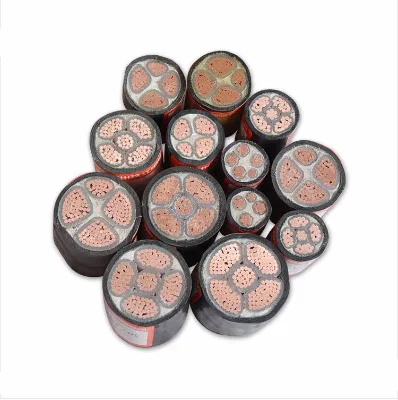
When sourcing low voltage XLPE power cables, buyers must first establish a clear understanding of the fundamental technical attributes that define product performance. The core material composition is critical; observed data indicates that conductor materials are typically available in either Copper or Aluminum, with specific model variations like YJV, YJLV, YJV32, and YJLV22 suggesting distinct construction profiles. The insulation material is consistently identified as XLPE (Cross-Linked Polyethylene), a choice that offers superior thermal stability and electrical properties compared to traditional PVC. The conductor shape is observed as Round Wire, and the cable construction often features a stranded conductor type to enhance flexibility and mechanical durability.
Voltage ratings for these cables generally fall within the low and medium voltage spectrum, with specific observations noting ratings such as 0.6/1kV. The current type can be either AC or DC, though the primary application context often leans toward AC power distribution. The jacket or sheath material varies by model, with PE (Polyethylene) and PVC (Polyvinyl Chloride) being the most common observations. For specific armored variants, the model numbers often imply the presence of protective layers, which is essential for underground or direct burial applications. The cross-section range observed spans from 1.5mm² up to 800mm², allowing for a wide variety of current-carrying capacities. Core configurations are equally diverse, supporting 1, 2, 3, 4, 5, 3+1, 3+2, and 4+1 core arrangements to suit single-phase, three-phase, and four-wire systems.
| Attribute | Observed Specifications |
|---|---|
| Insulation Material | XLPE |
| Conductor Material | Copper or Aluminum |
| Voltage Rating | Low Voltage (e.g., 0.6/1kV), Medium Voltage |
| Jacket/Sheath | PE, PVC |
| Cross Section | 1.5mm² - 800mm² |
| Core Configurations | 1, 2, 3, 4, 5, 3+1, 3+2, 4+1 |
| Conductor Shape | Round Wire, Stranded |
Compliance Verification and Certification Standards
Navigating the regulatory landscape is a pivotal step in the procurement process. The supply chain for these cables is heavily influenced by international and regional standards. Observed product data lists compliance with a broad array of standards including BS, IEC, ASTM, DIN, and GB/T12706. Specifically, the IEC 60502 standard is frequently cited as a benchmark for power cables with extruded insulation. Buyers must verify that the specific batch or model they intend to purchase explicitly adheres to the standard required for their local jurisdiction, as "as request" or "upon your request" designations in supplier listings indicate that compliance is often customizable rather than fixed.
Certification verification is equally rigorous. The market data reveals a spectrum of certifications including CCC (China Compulsory Certification), CE, ISO, RoHS, VDE, TUV, BV, Kema, and Psb. It is important to note that not every listed product carries every certification; a specific supplier may offer CE and ISO, while another might provide the more comprehensive set including CCC and VDE. Buyers should not assume universal certification across all SKUs. The presence of certifications like TUV and Kema often signals a higher level of third-party validation, which is crucial for projects in Europe or other regions with strict safety mandates. When evaluating a supplier, the buyer must request specific test reports that correspond to the claimed certifications to ensure the product has undergone the necessary rigorous testing procedures.
Cost Drivers and Pricing Dynamics
The pricing structure for low voltage XLPE power cables is influenced by several volatile and structural factors. The observed price range in the market spans from $0.01 to $999, a wide variance that reflects differences in conductor material, cross-sectional area, and certification levels. The primary cost driver is the conductor material; copper conductors typically command a higher price point than aluminum conductors due to the intrinsic value of the metal and its superior conductivity. The cross-sectional area is the second major determinant, with prices scaling significantly as the cable size increases from 1.5mm² to 800mm².
Beyond raw materials, the complexity of the cable construction impacts cost. Armored cables, such as those indicated by model suffixes like YJV22 or YJV32, involve additional materials and manufacturing steps, increasing the unit price compared to unarmored variants. Packaging requirements also play a role; options range from standard wooden drums to iron wooden drums or steel drums, with specialized packing "upon your request" potentially incurring additional logistics costs. The Minimum Order Quantity (MOQ) observed ranges from 1 to 20,000 units, which directly affects the per-unit cost. Buyers purchasing in smaller quantities may face higher per-meter costs, while bulk orders can leverage economies of scale. Customization availability is a key factor; while customization is listed as available, bespoke specifications often require a premium and may extend lead times.
Typical Applications and Environmental Suitability
Low voltage XLPE power cables are designed for a diverse range of applications, each imposing specific environmental and mechanical demands. The data indicates suitability for power stations, underground installations, construction sites, and industrial facilities. The "Underground" application is particularly relevant for armored models, where the additional mechanical protection provided by steel tape or wire armor prevents damage during backfilling and long-term soil pressure. For overhead applications, specific models like ABC (Airborne Bare Conductor) or cables with specific insulation properties are required to withstand tension and environmental exposure.
The choice between Copper and Aluminum conductors often depends on the specific application requirements. Copper is generally preferred for applications requiring high reliability and space efficiency, such as in power stations or complex industrial setups. Aluminum, being lighter and more cost-effective, is often utilized in long-distance distribution or where weight is a critical constraint. The insulation material, XLPE, provides excellent resistance to heat and moisture, making it suitable for both indoor and outdoor use. However, for applications requiring fire resistance or low smoke emission, buyers should verify if the cable meets LSOH (Low Smoke Zero Halogen) requirements, as this is a specific attribute noted in the product data. The voltage rating must also align with the system; while 0.6/1kV is common for general distribution, higher voltage ratings may be necessary for specific industrial loads.
Supplier Evaluation and Geographic Considerations
Evaluating suppliers requires a focus on their geographic origin and manufacturing capabilities. The observed data points to suppliers primarily located in China, with specific mentions of Henan, Zhengzhou, and Hebei provinces. These regions are known for their concentration of cable manufacturing infrastructure. However, the presence of a location does not guarantee uniform quality; buyers must assess the specific factory's capacity and track record. The "Customization: Available" attribute suggests that many suppliers are flexible, but this flexibility must be balanced against their ability to maintain consistent quality control.
When selecting a supplier, buyers should look for evidence of robust quality management systems. The presence of ISO certification is a baseline indicator, but the depth of the supplier's internal controls is often more telling. Suppliers offering a wide range of certifications (CCC, CE, VDE, TUV) demonstrate a commitment to meeting diverse international standards. It is also crucial to verify the supplier's ability to handle the specific packaging requirements, whether standard export drums or specialized iron drums. The lead time and production capacity are often tied to the MOQ; suppliers with higher MOQ capabilities may offer better pricing but require larger capital outlay. Buyers should avoid relying on a single supplier and instead maintain a diversified supply chain to mitigate risks associated with regional disruptions or capacity constraints.
Quality Control and Long-Term Procurement Strategy
Implementing a rigorous quality control (QC) protocol is essential for ensuring the longevity and safety of the installed cable infrastructure. Given the wide range of observed specifications, buyers must define clear acceptance criteria before production begins. This includes verifying the conductor resistance, insulation thickness, and sheath properties against the agreed-upon standards like IEC 60502 or GB/T12706. Third-party inspection services can be employed to conduct pre-shipment inspections, focusing on critical dimensions and material composition. For high-stakes applications, such as power stations or underground networks, factory acceptance testing (FAT) is recommended to validate the product before it leaves the manufacturing facility.
Long-term procurement considerations extend beyond the initial purchase price. Buyers should evaluate the supplier's ability to provide consistent product quality over time, especially when reordering. The availability of spare parts or replacement cables in the future is a critical factor for maintenance planning. Additionally, the supplier's responsiveness to technical queries and their willingness to provide updated test reports are indicators of a reliable partnership. As market standards evolve, suppliers who actively update their compliance documentation and adapt to new regulations will be better positioned to support the buyer's long-term needs. Finally, the total cost of ownership should be calculated, factoring in installation ease, maintenance requirements, and the expected service life of the XLPE insulation, which is generally superior to older technologies when installed correctly.
FAQs
What conductor materials are available for low voltage xlpe power cable?
Conductor materials are available in either copper or aluminum. These options allow buyers to select based on conductivity needs or cost constraints while maintaining the standard XLPE insulation properties.
Which certifications are commonly listed for these power cables?
Common certifications include CCC, CE, ISO, RoHS, VDE, TUV, BV, Kema, and Psb. Buyers should verify specific test reports as not every listed product carries every certification.
Can I customize the packaging for low voltage xlpe power cable orders?
Customization is available for packaging requirements. Options include wooden drums, iron wooden drums, steel drums, or standard export drums, with specialized requests potentially incurring additional logistics costs.
What voltage ratings apply to low voltage xlpe power cable models?
Voltage ratings generally fall within the low and medium voltage spectrum, with specific observations noting ratings such as 0.6/1kV. Higher voltage ratings may be necessary for specific industrial loads.
Where are the primary manufacturing locations for these cables?
Primary manufacturing locations are in China, specifically Henan, Zhengzhou, and Hebei provinces. Buyers must assess the specific factory's capacity and track record regardless of the regional concentration.
What is the typical cross-section range for these cables?
The cross-section range spans from 1.5mm² up to 800mm². This wide variety allows for different current-carrying capacities to suit various power distribution requirements.
Which standards do these cables typically comply with?
Cables typically comply with standards including BS, IEC, ASTM, DIN, GB/T12706, and IEC60502. Compliance is often customizable, so buyers must verify that specific batches adhere to required local jurisdictions.